

Overview
About This Place
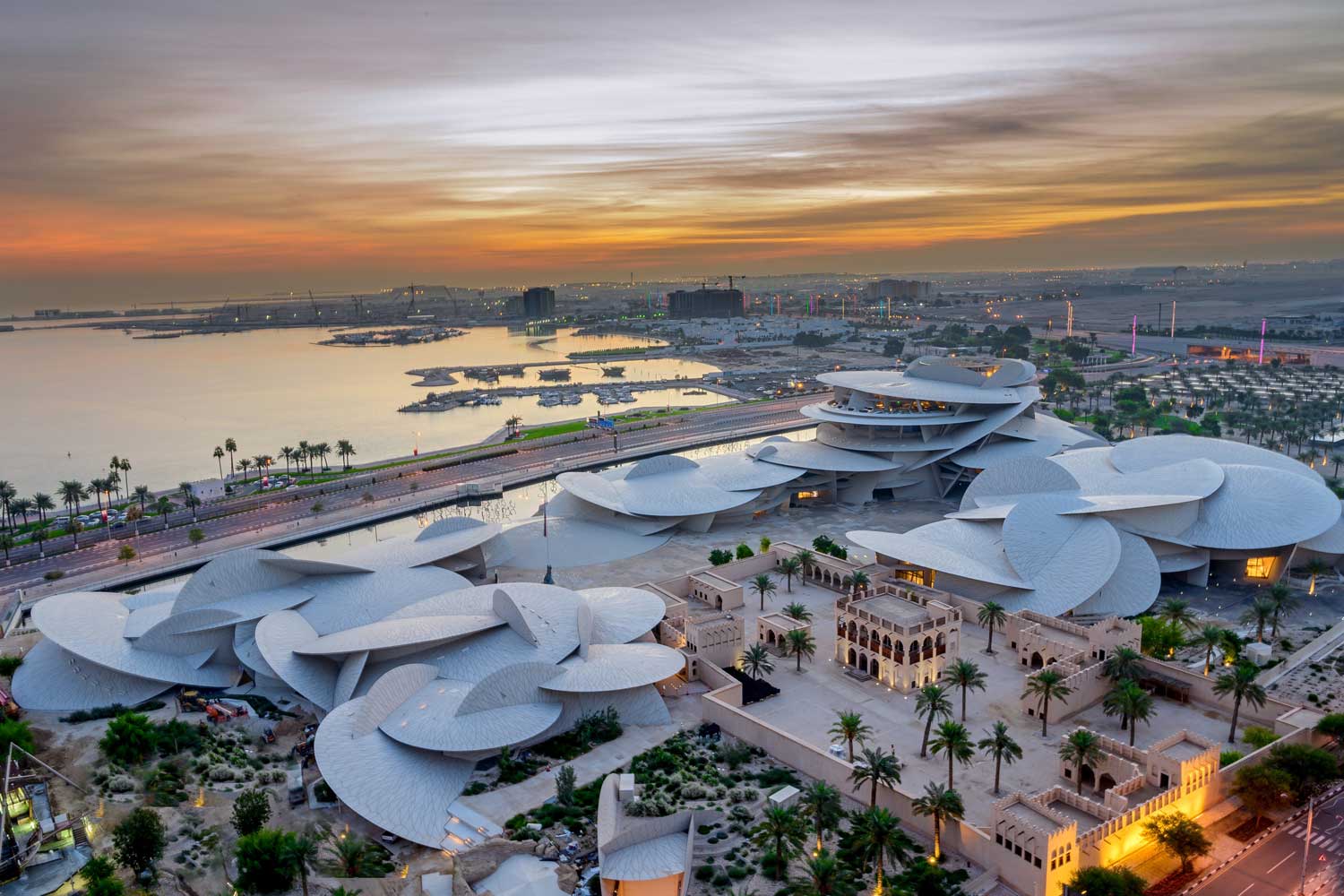
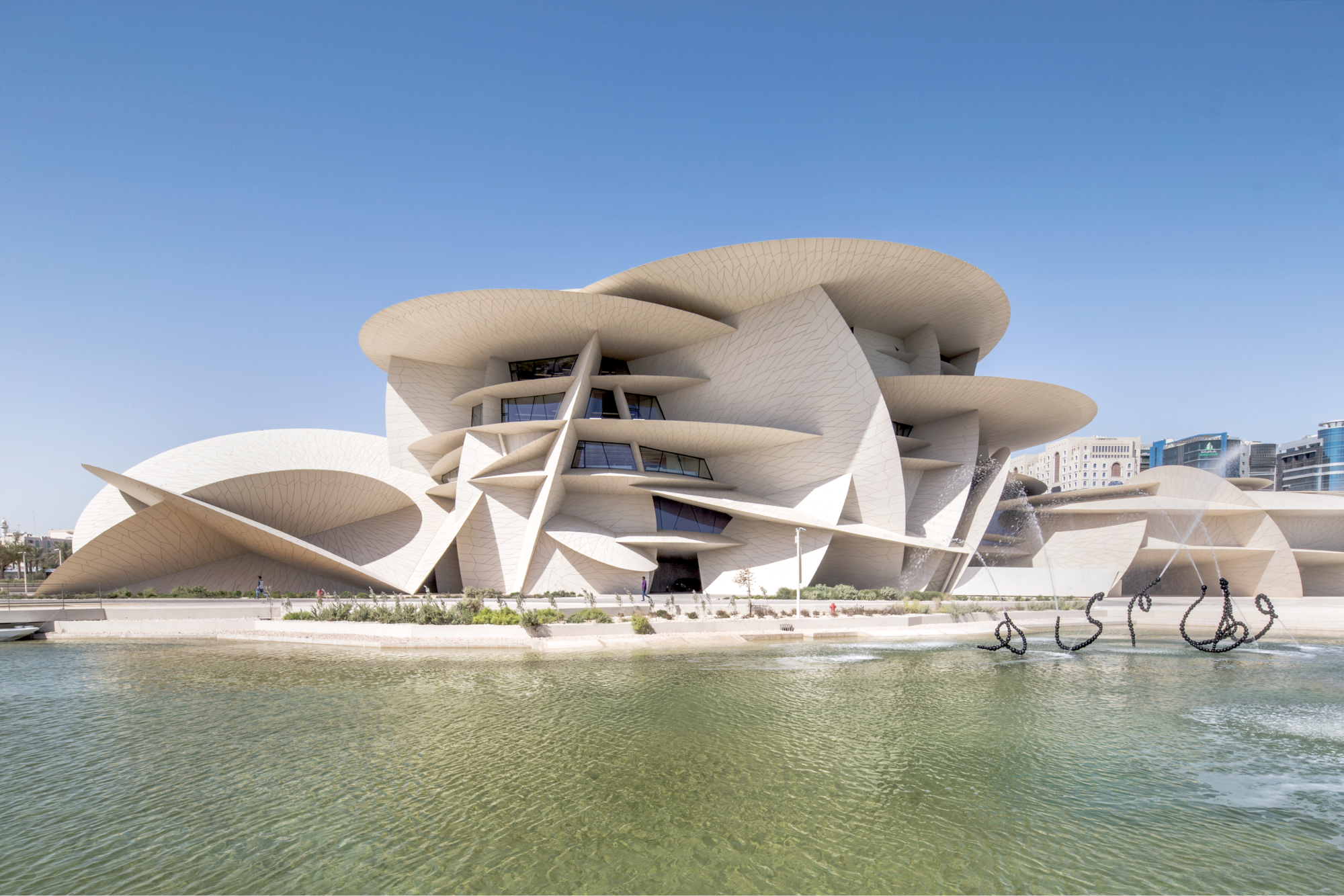
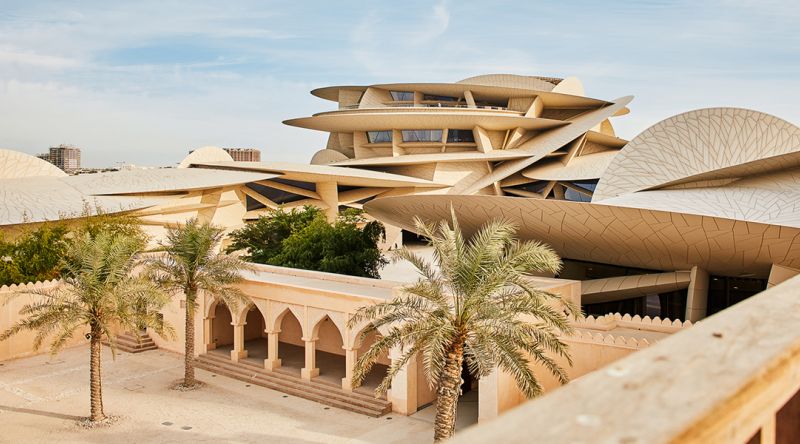
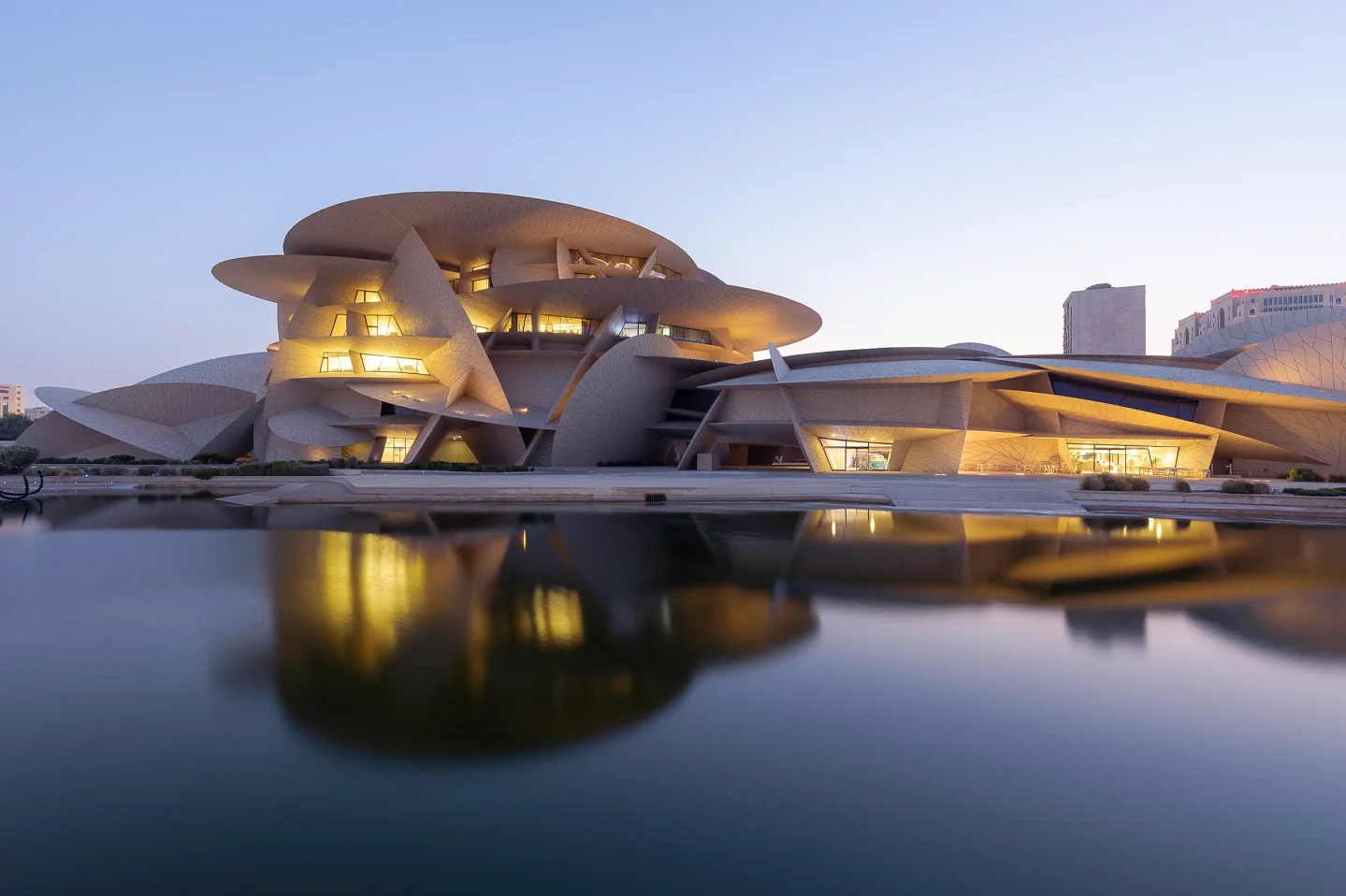
The National Museum of Qatar is the physical manifestation of the country's identity, a place where Qatar's full story is told from its ancient geological origins through its Bedouin heritage, its pearling era, the discovery of oil, and its transformation into a modern global nation. Designed by French architect Jean Nouvel and inspired by the desert rose crystal, a natural mineral formation found in Qatar's arid desert, the building is as extraordinary as its contents. Interlocking disc-shaped volumes of varying sizes radiate outward from a central core, mimicking the overlapping petals of the crystalline formation. The building wraps protectively around the historic palace of Sheikh Abdullah bin Jassim Al Thani, which is preserved at its heart.
History
Historical Significance
The site has deep historical significance: the palace of Sheikh Abdullah bin Jassim Al Thani was built in the early 20th century and served as both the ruler's residence and the seat of government. In 1975, it was converted into Qatar's first national museum. As the country grew, a new, far larger facility was needed, but rather than demolishing the palace, Jean Nouvel's design was conceived to embrace it, building around and through it so that the historic structure remains visible and accessible within the new museum. The National Museum officially opened in 2019 and has since become one of the most visited cultural destinations in the region, drawing over half a million visitors in its first year.
Timeline
Key Historical Events
Planning Your Visit
When to Go
Best Time to Visit - hover a month
Sat-Mon & Wed: 9 AM-7 PM · Thu: 9 AM-9 PM · Fri: 1:30 PM-7 PM · Closed Tue · Ramadan hours vary
Allow 2-3 hours for a full visit. The museum is on the Corniche, combine it with a walk along the waterfront.
Walk the exterior of the building before entering, the desert rose geometry is itself an experience.
Gallery
In Photos
Location